
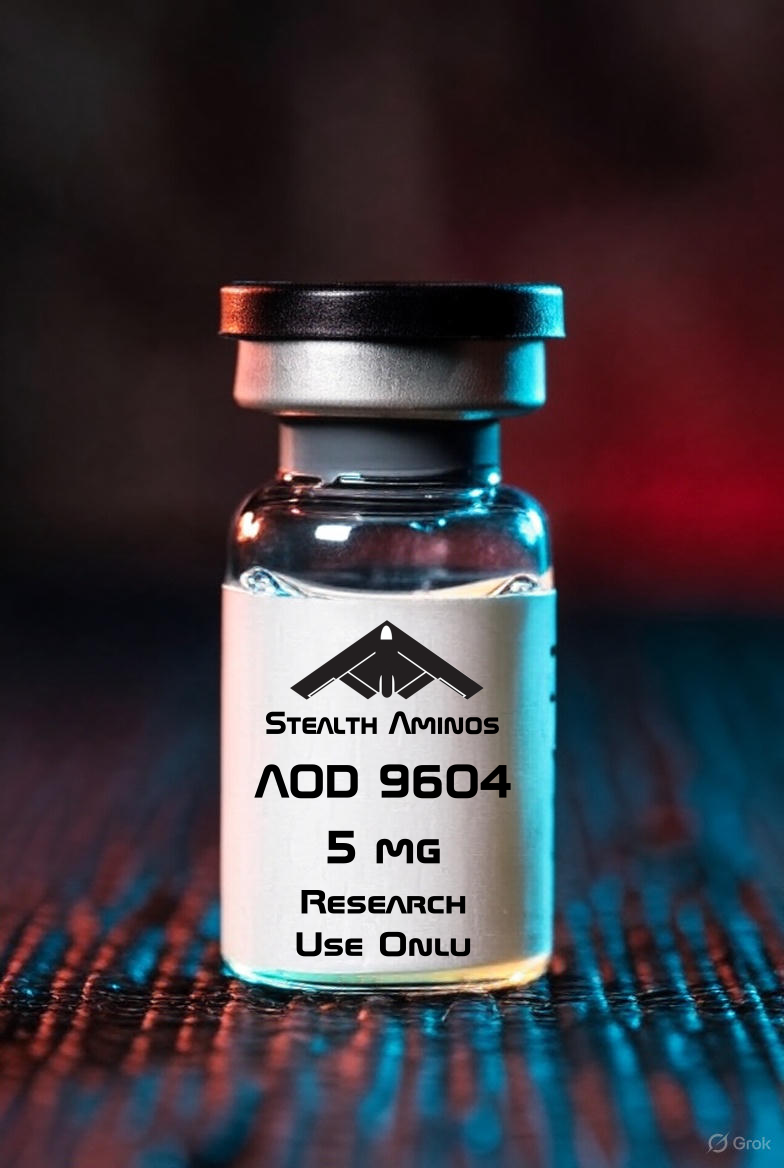
Description
AOD 9604 (also written as AOD9604 or AOD-9604) is a synthetic peptide designed as a modified fragment of human growth hormone (hGH). Specifically, it corresponds to amino acids 176-191 of the hGH molecule (often called hGH Fragment 176-191), with a tyrosine residue added at the N-terminal end for stability. This makes it a 16-amino acid peptide.
It was originally developed in the 1990s (notably by researchers at Monash University in Australia) as an anti-obesity drug (hence “AOD”) to harness the fat-reducing (lipolytic) effects of full hGH without its broader side effects, such as stimulating insulin-like growth factor 1 (IGF-1) production, impacting blood sugar levels, promoting muscle growth, or causing other hormone-related issues.
Key Characteristics and Purported Effects
- Primary mechanism: It promotes the breakdown of stored fat (lipolysis), increases fat oxidation, and may help prevent new fat accumulation, while supporting metabolism. Animal studies (e.g., in obese mice) showed it could reduce body weight and fat mass, sometimes by enhancing sensitivity in fat-burning pathways like beta-3 adrenergic receptors.
- Advantages over full hGH: It does not significantly affect IGF-1 levels, insulin sensitivity, or cause unwanted tissue growth, making it more targeted for fat loss.
- Other potential benefits explored in research: Possible support for bone health (via effects on osteoblasts) or cartilage repair, though these are less established.
Status and Availability
- Early human trials demonstrated good safety and tolerability (similar to placebo in some studies), but later trials did not show strong enough efficacy for significant weight loss.
- Development as a pharmaceutical was discontinued around 2007.
- It is not FDA-approved for any use, including weight loss or obesity treatment. It remains unapproved by major regulatory bodies worldwide.
- Despite this, it is sometimes used off-label or in research/peptide therapy contexts (e.g., in wellness clinics) for fat metabolism support, often marketed as the “fat-burning peptide.”
- It is banned by organizations like WADA (World Anti-Doping Agency) for athletes.
Note: While some sources promote it for weight management, evidence from controlled human studies is limited compared to animal models, and results have been mixed. Always consult a healthcare professional before considering any peptide or off-label therapy, as safety, dosing, and interactions can vary.
Reviews
There are no reviews yet.