
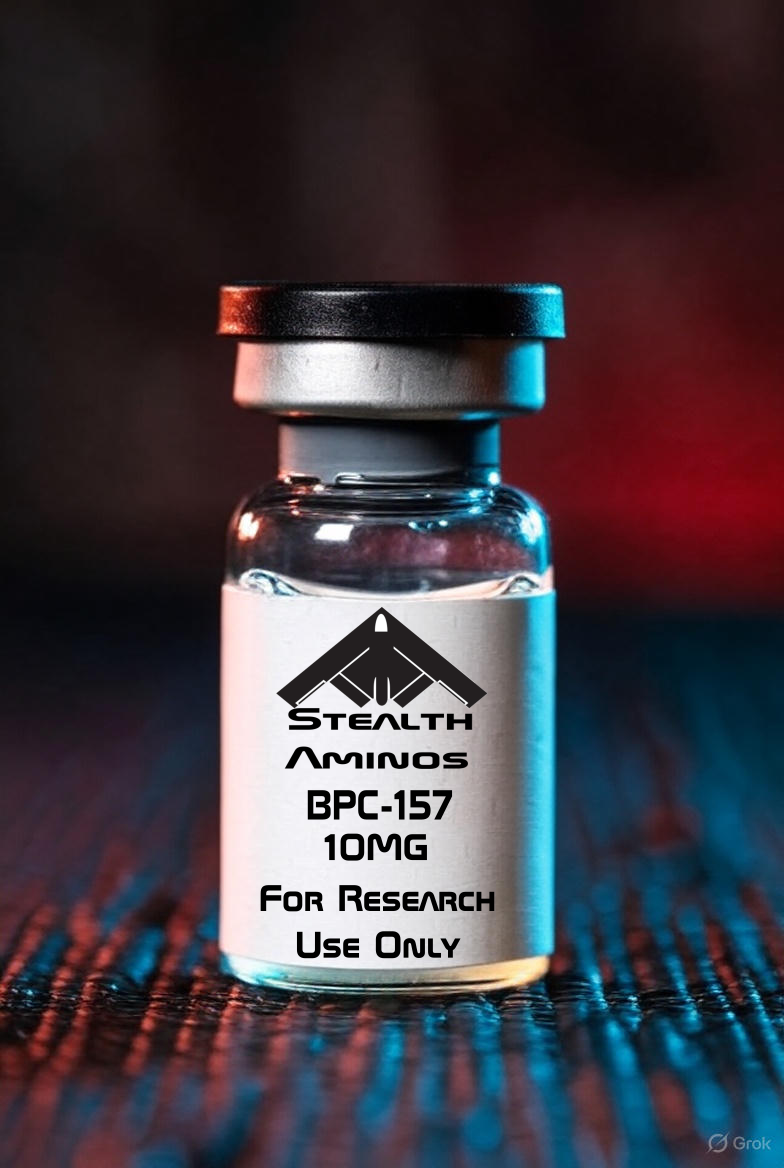
Description
BPC-157 10mg Peptide Description
BPC-157 10mg is a research-grade synthetic pentadecapeptide supplied as a lyophilized powder in a single vial, intended exclusively for in-vitro laboratory studies on tissue repair, gastrointestinal integrity, angiogenesis, and neuroprotection. It is not approved for human or veterinary therapeutic use and is strictly for scientific research purposes.
Composition
- Active Ingredient: BPC-157 acetate (Body Protection Compound-157), a 15-amino-acid fragment (sequence: GEPPPGKPADDAGLV) derived from a protective protein found in human gastric juice.
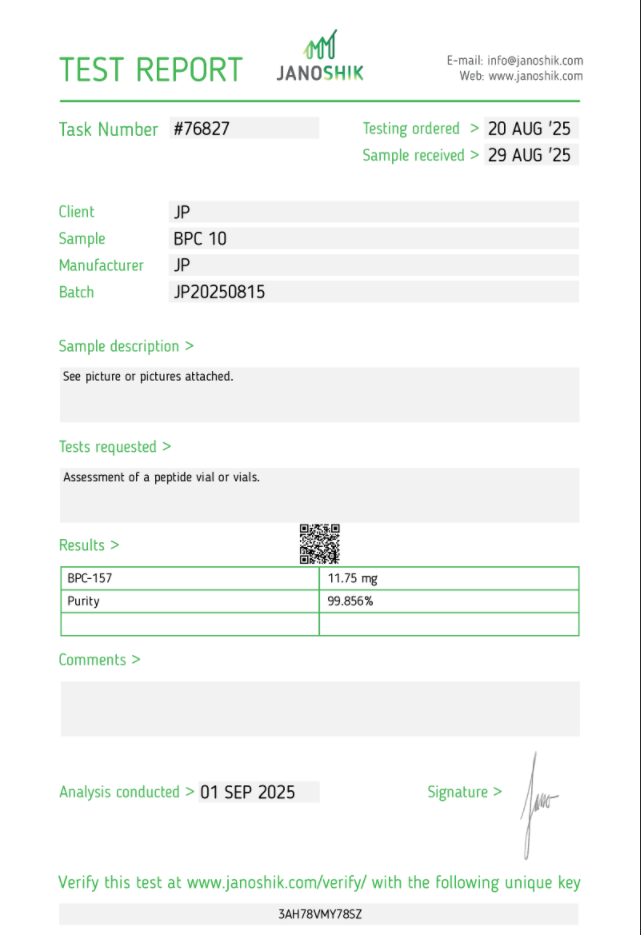
- Purity: ≥99% by HPLC and mass spectrometry (third-party COA required for verification).
- Molecular Weight: 1,419.33 Da
- Molecular Formula: C₆₂H₉₈N₁₆O₂₂
- Form: Lyophilized white powder; highly stable in dry form.
- Storage:
- Lyophilized: -20°C, desiccated, protected from light (stable 2+ years).
- Reconstituted: 2–8°C for up to 4 weeks; avoid repeated freeze-thaw cycles.
The 10mg vial allows flexible dosing in preclinical models (typically 10–100 doses depending on concentration).
Mechanism of Action
BPC-157 acts as a signaling peptide with pleiotropic effects:
- Upregulates growth factors (VEGF, FGF, EGR-1) to promote angiogenesis and fibroblast migration.
- Modulates nitric oxide (NO) pathways, enhancing blood flow and tissue perfusion.
- Stabilizes gut-brain axis via serotonin and dopamine receptor interactions.
- Accelerates tendon-to-bone healing by increasing tenocyte proliferation and collagen organization.
- Exhibits anti-inflammatory effects by reducing pro-inflammatory cytokines (TNF-α, IL-6) without immunosuppression.
It is highly stable in gastric acid and shows systemic activity when administered subcutaneously, intramuscularly, or orally in animal models.
Research Applications
BPC-157 10mg is widely studied in preclinical models for:
| Application | Key Findings (Animal Models) |
|---|---|
| Gastrointestinal Healing | Accelerates repair of gastric ulcers, fistulas, and inflammatory bowel disease (IBD) lesions. |
| Musculoskeletal Repair | Promotes tendon, ligament, muscle, and bone regeneration; enhances Achilles tendon healing. |
| Neuroprotection | Reduces brain trauma damage, improves functional recovery post-stroke or TBI. |
| Wound Healing | Speeds dermal, corneal, and burn wound closure via collagen deposition. |
| Cardiovascular | Protects against ischemia-reperfusion injury; supports vascular graft integration. |
Reviews
There are no reviews yet.