
Description
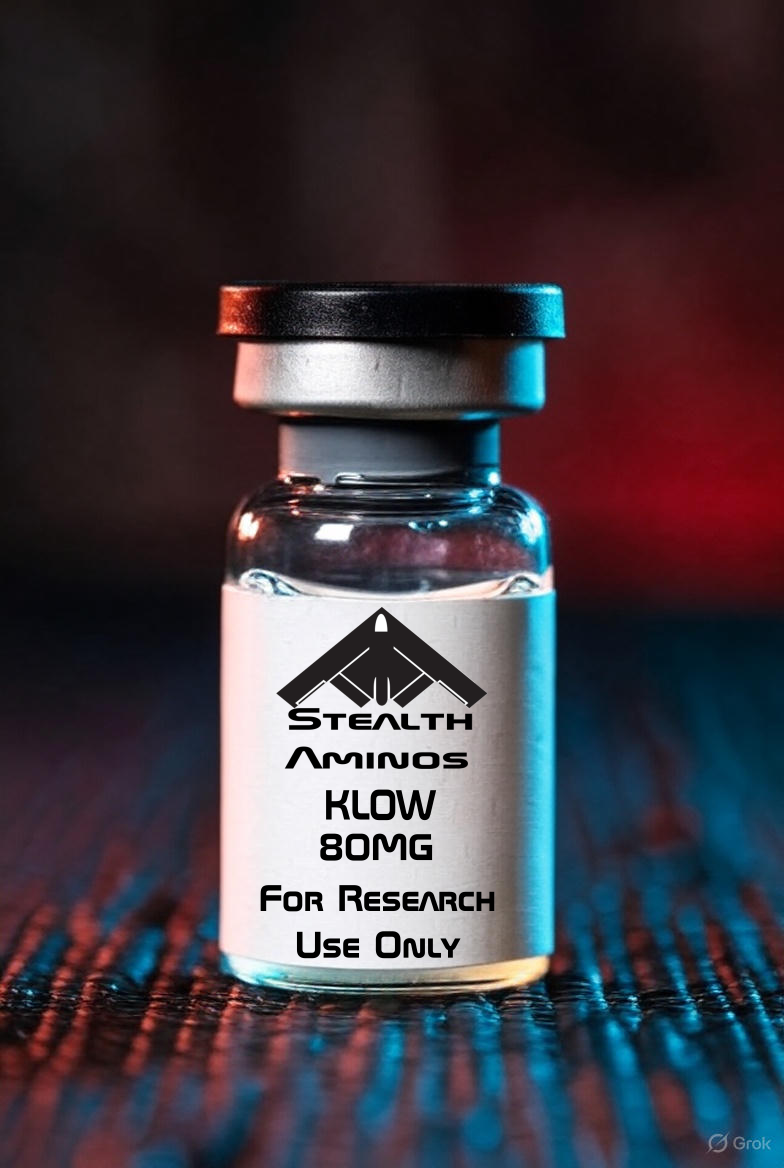
KLOW 80mg Peptide Blend
KLOW 80mg is a research-grade peptide blend consisting of four synthetic peptides combined in a single lyophilized powder vial for in-vitro studies, primarily focused on tissue repair, wound healing, inflammation reduction, skin rejuvenation, and angiogenic pathways. It is not approved for human consumption, medical, or veterinary use and is intended solely for laboratory research.
Composition
The blend totals 80mg and typically follows a 5:1:1:1 ratio:
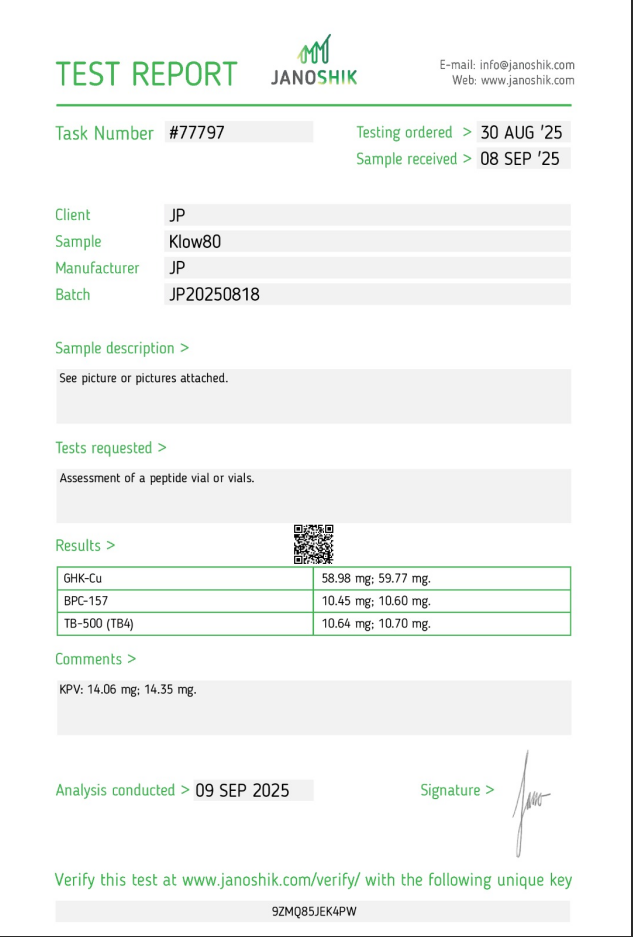
- GHK-Cu (Glycyl-L-Histidyl-L-Lysine Copper): 50mg – A copper-binding tripeptide known for promoting collagen synthesis, skin elasticity, and anti-inflammatory effects.
- BPC-157 (Body Protection Compound-157): 10mg – A synthetic peptide derived from gastric juices, studied for accelerating tendon, ligament, and gut tissue repair.
- TB-500 (Thymosin Beta-4): 10mg – A 43-amino-acid peptide that supports cell migration, angiogenesis, and muscle recovery.
- KPV (Lys-Pro-Val): 10mg – A tripeptide fragment of alpha-MSH (melanocyte-stimulating hormone) with potent anti-inflammatory properties, aiding in reducing cytokine activity and supporting gut and skin healing.
The product is supplied as a ≥99% pure lyophilized powder, often requiring reconstitution with bacteriostatic water for research protocols. Storage recommendations include -20°C in a cool, dry place.
Research Applications
KLOW builds on earlier blends like “GLOW” (GHK-Cu, BPC-157, TB-500) by incorporating KPV for enhanced anti-inflammatory synergy. It targets complementary pathways:
- ul]:whitespace-normal [&>ol]:whitespace-normal”>Tissue Regeneration and Wound Healing: BPC-157 and TB-500 promote fibroblast activity and extracellular matrix formation.
- ul]:whitespace-normal [&>ol]:whitespace-normal”>Anti-Inflammation: KPV and GHK-Cu modulate immune responses and reduce oxidative stress.
- ul]:whitespace-normal [&>ol]:whitespace-normal”>Skin and Joint Health: Supports collagen production and joint mobility in model systems.
No clinical trials have evaluated the full KLOW combination for safety or efficacy in humans, though individual peptides have varying levels of preclinical support. Researchers should consult third-party lab testing (e.g., COA) for purity verification.
For dosage or mixing guides in research settings, typical protocols suggest reconstituting the 80mg vial with 2-4mL of solvent for targeted concentrations, but specifics vary by study design. Always adhere to institutional safety guidelines.
Reviews
There are no reviews yet.