
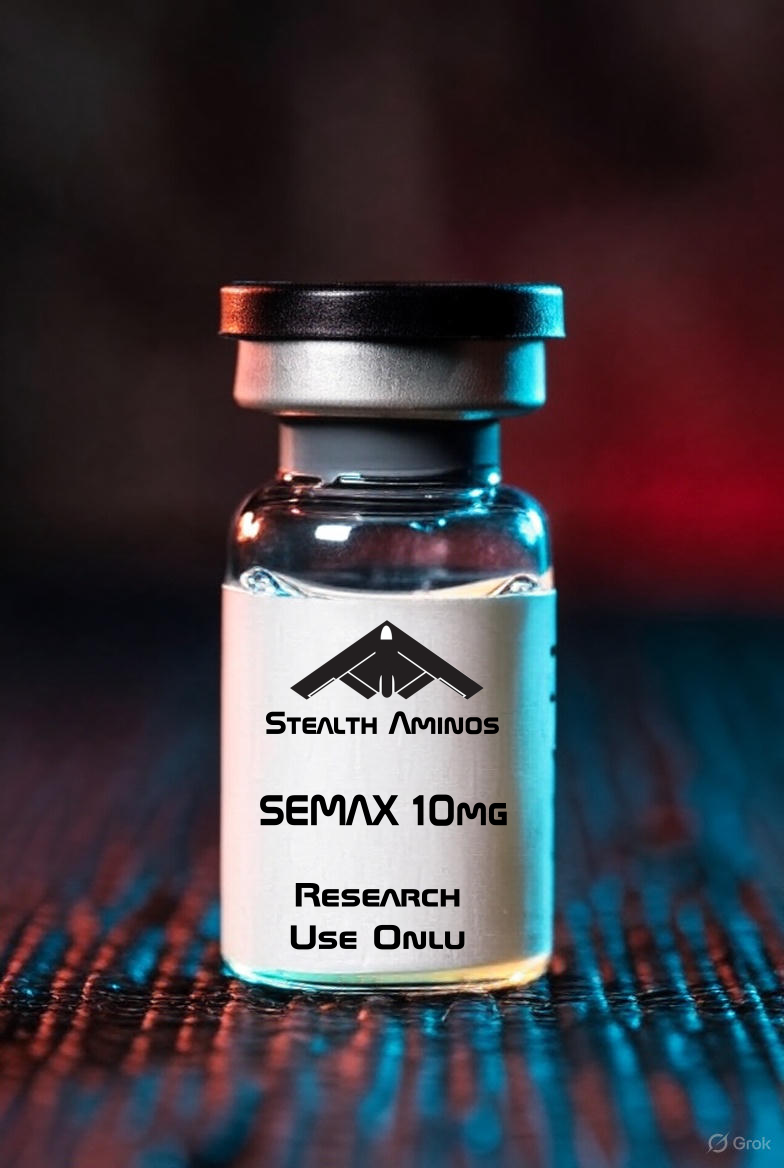
Description
Semax (also known as SEMAX) is a synthetic heptapeptide (7-amino-acid chain) with the sequence Met-Glu-His-Phe-Pro-Gly-Pro (MEHFPGP). It is a modified analog of the N-terminal fragment (4-10) of adrenocorticotropic hormone (ACTH), engineered to retain potent neurotrophic and neuroprotective properties while completely lacking the hormonal/endocrine effects of native ACTH (e.g., no impact on cortisol release or related systemic issues).
Developed in Russia in the 1980s–1990s by researchers at the Institute of Molecular Genetics, Semax is approved there as a prescription medication (often in nasal drop or spray form) for conditions like stroke recovery, brain trauma, cognitive disorders, optic nerve issues, and encephalopathy. Outside Russia/Eastern Europe, it is not FDA-approved and is primarily available through research peptide suppliers or compounding pharmacies, commonly used off-label as a nootropic for cognitive enhancement.
Key Features and Potential Uses
- Primary Mechanism: Semax acts as a neuromodulator and neurotrophic agent. It rapidly increases expression of brain-derived neurotrophic factor (BDNF) and its receptor TrkB (especially in the hippocampus and frontal cortex), nerve growth factor (NGF), and other factors involved in neuroplasticity, synaptic strengthening, and neuronal survival. It may also enhance monoamine (dopamine, serotonin) circulation, improve cerebral blood flow/oxygenation, modulate stress responses (e.g., normalizing HPA axis and reducing excessive cortisol effects), provide antioxidant protection, and influence gene expression related to neuroprotection.
- Administration: Primarily intranasal (nasal spray or drops) for fast absorption through the nasal mucosa directly into the brain (bypassing much of the digestive system and blood-brain barrier issues). Subcutaneous injection is also used in some research. Oral bioavailability is poor.
- Onset and Duration: Effects often begin within 15–30 minutes (intranasal), with cognitive benefits lasting 4–24 hours depending on dose and individual factors.
- Typical Research/Compounded Dosing (from Russian clinical data, reviews, and user reports; not medical advice):
- For nootropic/cognitive enhancement in healthy individuals: 100–600 mcg (0.1–0.6 mg) per day, often 1–3 doses (e.g., 200–300 mcg intranasally 1–2x daily).
- For therapeutic uses (e.g., stroke recovery): Higher doses like 1–2 mg/day (e.g., 2–4 drops of 1% solution 3–4x daily).
- Cycles: Often 10–30 days, with breaks to prevent tolerance. Start low and titrate.
Potential Benefits
- Cognitive Enhancement (Nootropic): Improves attention, focus, short-term/working memory, learning capacity, mental clarity, and information processing speed. May reduce brain fog and enhance motivation/productivity.
- Neuroprotection and Recovery: Supports brain repair after injury (e.g., stroke, trauma), reduces infarct size in models, protects against oxidative stress, ischemia, and neuroinflammation.
- Mood and Stress Support: Anxiolytic (reduces anxiety), potential antidepressant effects, helps stabilize mood under stress, and may mitigate negative stress impacts on cognition.
- Other Areas: Emerging research on ADHD/Rett syndrome potential, improved immune modulation, cardiovascular support in brain contexts, and general brain health optimization.
Potential Side Effects
Semax is generally well-tolerated in Russian clinical use and anecdotal reports, with a favorable safety profile compared to many stimulants/nootropics. Common mild issues (mostly intranasal):
- Nasal irritation (burning, dryness, congestion, runny nose, or discoloration; ~10% in some reports).
- Headaches (often mild/transient).
- Insomnia, increased anxiety (at higher doses or in sensitive individuals).
- Nausea, dizziness, or mild overstimulation. Rare/other: Possible blood glucose changes in diabetics; long-term effects unknown due to limited Western data. No major hormonal disruptions reported.
Note: Semax is not FDA-approved in the US and lacks large-scale Western clinical trials. Evidence is strongest from Russian studies (stroke/neuroprotection) and preclinical/animal models, with promising but limited human data for nootropic use. Availability varies—often as nasal spray (e.g., 0.1% or 1% solutions) from research vendors.
Always consult a qualified healthcare professional before considering any peptide, as responses vary, sourcing quality matters, and self-experimentation carries risks. Research is ongoing, particularly in neuroregeneration and cognitive domains. If you’re exploring it alongside others like PT-141 or KPV (from prior chats), let me know for comparisons!
Reviews
There are no reviews yet.